


Does Drinking Water Help Acne?
Posted by Farah Afridi on
Does Drinking Water Help Acne? Not the Way You've Been Told.
Short answer: No, drinking water doesn't clear acne. There's no good evidence that water intake reduces breakouts, and it doesn't "flush toxins" (your liver and kidneys do that without help). What water does do is keep skin cells hydrated, which supports a healthy barrier, and a healthy barrier is less irritable and less prone to compensatory oiliness. So: drink enough, don't expect miracles, and put the real effort into oil balance and a gentle routine.
"Drink more water" is the skincare advice everyone gives because it's free, it's safe, and nobody can argue with it. It's also wildly oversold. Water is not a treatment for acne. It has never been shown to be one. Anyone who tells you eight glasses a day will clear your skin is selling you a vibe.
Here's what water actually does for your skin, what it doesn't, and where the effort should go instead.
What drinking water does for your skin
Your skin is around 60% water and its outer layer needs a certain water content to stay flexible and intact. When you're under-hydrated, that layer gets tighter, duller and slightly rougher. Small studies suggest that people who habitually drink little water see measurable improvements in skin hydration when they increase intake; people who are already drinking enough see little change. That's the whole effect: a floor, not a ladder.
A well-hydrated barrier matters for acne indirectly. A compromised barrier is more reactive to actives, more prone to irritation, and (this part is plausible but less well proven than the internet suggests) may respond with more oil. Keeping the barrier hydrated, from inside and out, gives everything else you're doing a better surface to work on.
What drinking water does not do
- It doesn't flush toxins. "Toxins" in skincare content is a placeholder word for nothing in particular. Your liver and kidneys handle waste; water helps them do their job, but extra water doesn't scrub your skin from the inside.
- It doesn't unclog pores. Pores clog with oil and dead skin cells. Water intake has no effect on either.
- It doesn't regulate oil. Sebum production is driven by hormones and genetics. Dehydration may make skin feel oilier as the barrier struggles, but drinking water won't dial oil down.
- It doesn't erase wrinkles. Hydrated skin looks plumper for a few hours. Long-term elasticity is collagen, sun protection and genetics.
Dehydrated skin vs dry skin (they're different problems)
This is the distinction the "drink water" crowd misses. Oily, acne-prone skin can be dehydrated, and treating it as "dry" makes things worse.
| Dehydrated skin | Dry skin | |
|---|---|---|
| What's missing | Water | Oil |
| Who gets it | Any skin type, including oily | Naturally low-oil skin types |
| Looks like | Dull, tight, fine lines that appear and vanish, can still be shiny | Flaky, rough, matte, sometimes itchy |
| Common cause | Under-drinking, over-cleansing, harsh actives, air-con, weather | Genetics, age, barrier disorders |
| Fix | Water in (drink) + water held (humectants like glycerin, aloe, hyaluronic acid) | Oil replaced (richer moisturisers, ceramides) |
If your acne-prone skin is tight after cleansing but oily by lunchtime, it's dehydrated, not dry. You need water-based hydration, not heavier creams.
How much water should you drink for your skin?
The "eight glasses a day" rule has no scientific origin. Australian dietary guidelines put adequate total fluid intake at roughly 2.1 litres a day for women and 2.6 for men, and about a fifth of that comes from food. (These figures are from national guidelines as I understand them; please verify against the current NHMRC recommendations.) Needs go up with heat, exercise and caffeine.
The practical version: drink when thirsty, drink more in summer and after training, and check your urine colour (pale straw is right; dark means drink). You don't need to force it, and past the point of adequate, extra water does nothing for your face.
Eat your water
Water-rich foods count toward intake and bring nutrients along: cucumber, watermelon, celery, oranges, tomatoes, leafy greens. Soups and broths help in winter. Cutting sugary drinks does more for acne than adding water does, because sugar has an actual, evidence-backed link to breakouts and water has only an indirect one.
Hydration from the outside (this is where the leverage is)
Drinking water raises the floor. Topical hydration is what most acne-prone skin is actually missing, because the instinct is to strip oil and skip moisturiser, and that's a fast route to a dehydrated, irritated, oilier face.
- Cleanse without stripping. Lukewarm water, not hot, and a cleanser that removes oil without taking the barrier with it. Our Acne Control Cleansing Mousse does that job with aloe and green tea to calm.
- Add a water-based hydrator. Humectants pull water into the skin. The Australian Botanicals Hydration Essence is the lightweight, oil-free layer for skin that's dehydrated but not dry.
- Moisturise, even if you're oily. A light, non-comedogenic moisturiser like our Acne Control Moisturiser holds water in and keeps the barrier calm. Skipping it is the single most common mistake oily skin makes.
- Mask for oil, not for hydration. A clay mask like the Skin Purifying Mask absorbs excess oil and clears congestion. It isn't a hydrating mask, so follow it with the essence and moisturiser.
- Sunscreen every morning. Sun damage is the biggest driver of the elasticity loss people blame on dehydration.
Support from within (the part that actually moves acne)
If water isn't the lever, what is? Oil. Every breakout starts with a pore clogged by excess sebum, and sebum is driven from inside.
- Vitamin B5. Our Extra Strength Acne Control Vitamins are built around high-dose pantothenic acid to support healthy oil balance from within. That's the inside-out work water gets the credit for.
- Skin nutrition. For skin that needs maintenance rather than acne control, the Skin Rescue Vitamins One-a-Day supply zinc, B5 and supporting nutrients for skin repair and renewal.
- Gut and antioxidant support. The Clear Skin Superfood Booster is a daily powder you mix into water, which is, in fairness, the one legitimate way to upgrade a glass of water.
- Essential fatty acids. Omega-3s (fish oil) and evening primrose oil support barrier function and can help skin hold moisture. Reasonable to add if your skin is persistently dehydrated.

Skin Rescue Vitamins - One a Day
Add To Cart -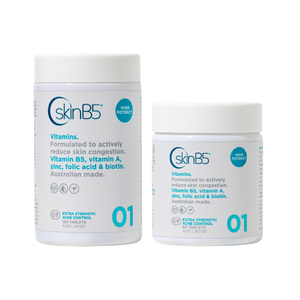
Extra Strength Acne Control Vitamins - choose from 2 pack sizes
Add To Cart -FAQs
Does drinking water help acne? Not directly. No good evidence shows water intake reduces acne. Adequate hydration supports a healthy skin barrier, which is a helpful foundation, but acne is driven by oil, dead skin cells, bacteria and hormones, none of which water changes.
Does drinking water flush out toxins from your skin? No. Your liver and kidneys remove waste, and water helps them function, but there's no mechanism by which extra water "cleanses" the skin or clears pores.
How much water should I drink for clear skin? Enough to stay hydrated: roughly 2–2.5 litres of total fluid a day for most adults, more in heat or with exercise. Beyond adequate, extra water has no additional skin benefit.
Can oily skin be dehydrated? Yes, and it often is. Dehydrated skin lacks water; dry skin lacks oil. Oily skin that feels tight after cleansing is dehydrated and needs water-based hydration, not heavier creams and not more stripping.
Does dehydration cause acne? Not on its own. Dehydration can weaken the skin barrier and make skin more reactive, which can worsen existing acne, but it isn't a root cause.
What's the best way to hydrate acne-prone skin? A gentle cleanser, a water-based hydrating layer, and a light non-comedogenic moisturiser, plus sunscreen by day. Drink enough water, but treat topical hydration as the main job.
Do I need to change my routine in dry weather or air-conditioning? Usually, yes. Cleanse once a day if skin is tight (a water splash in the morning is fine), add a hydrating essence under your moisturiser, and consider an essential fatty acid supplement if dehydration is persistent.
Water is the floor. Oil balance is the ceiling. The SkinB5 Starter Kit covers both: gentle cleanse and moisturise on the surface, Vitamin B5 supplements to support oil balance from within.
Related reading: How to Hydrate Dry Winter Skin Once and For All · 4 Common Beauty Mistakes Making Your Skin Worse · All-Natural DIY Hydration Ideas for the Cooler Months
Skin Health & Wellness Articles
RSS
Are Pimple Patches Actually Effective?
Pimple patches have quickly become a staple in modern skincare routines, earning widespread attention for their ability to target blemishes with precision. These tiny, sticker-like...

Pimple on Your Breast?
Pimple on Your Breast? It's Common, It's Treatable, and Here's When It Isn't a Pimple Short answer: Pimples on, under or between the breasts are...


