


Back Acne Causes and Treatments
Posted by Farah Afridi on
Back Acne (Bacne): Why It's Harder to Treat Than Your Face, and How to Clear It
Short answer: Back acne is real acne. Your back has some of the densest oil glands on your body, and unlike your face, it also gets sweat trapped under clothing, friction from straps and seats, and a cleansing routine you can't see or reach. Treat it with a benzoyl peroxide or salicylic acid wash after every sweat, loose breathable fabric, and oil support from within. If the bumps are small, uniform and itchy across the upper back, it may be fungal folliculitis, which needs an antifungal, not acne products. Never pick: the back and chest scar more readily than the face.
Your face gets a two-step routine, a mirror, and a moisturiser with a name. Your back gets whatever runs off your shoulders in the shower. And yet the skin on your upper back has oil glands as dense as your T-zone, spends the day sealed under fabric, and gets rubbed by a backpack, a bra strap, a car seat and a gym bench. Of course it breaks out.
Bacne isn't a different disease. It's the same acne with worse conditions and worse access. Here's how to give it a fair fight.
What causes back acne?
Five drivers, usually stacked:
- Oil. The upper back, shoulders and chest have high sebaceous gland density, driven by the same hormones and genetics as facial acne. This is why bacne surges in teenage years, around periods, and with hormonal conditions.
- Sweat sealed in. Fabric traps sweat against skin. Sweat softens the follicle, mixes with oil and dead cells, and clogs it. Staying in a damp shirt or sports bra after training is the single biggest avoidable cause.
- Friction. Backpack straps, bra bands, tight tops, leaning on car seats and gym benches. Dermatologists call this acne mechanica: pressure and rubbing that irritate follicles and push debris in. Bacne that maps to your straps is this.
- Product run-off. Conditioner, hair oil and body lotion rinsing down the back and sitting there. Wash your body after your hair, not before.
- Poor access. You can't see it, you can't easily reach it, and most people don't cleanse the back with anything deliberate. Dead skin builds up faster than on the face simply because nothing removes it.
Is it back acne or something else?
Two lookalikes matter, because acne products make them worse or do nothing.
| Back acne | Fungal (Malassezia) folliculitis | Acne mechanica | |
|---|---|---|---|
| Looks like | Mixed: blackheads, whiteheads, red pimples, some deep lumps | Small, uniform red bumps, all the same size, often across upper back and chest | Bumps in the pattern of straps, bands, or where you lean |
| Itchy? | Rarely | Usually, and worse in heat | Sometimes |
| Responds to acne products? | Yes | No, and antibiotics can make it worse | Only once the friction stops |
| Treatment | Below | Antifungal wash (a pharmacist can help) | Remove the friction, then treat as acne |
If your "bacne" is itchy, uniform, and hasn't budged after a month of acne care, ask a pharmacist or GP about fungal folliculitis. It's very common and very often misdiagnosed as stubborn acne.
How to get rid of back acne
1. Shower after sweat, every time
Not "when you get home." Straight after. If you can't, at least change into a dry top and wipe down with a cleansing wipe. This step alone clears mild bacne for a lot of people.
2. Use a treatment wash, not just soap
Benzoyl peroxide (5–10%) is the gold standard for body acne: it kills acne bacteria and reduces inflammation. Lather it on the back, leave it for one to two minutes, then rinse. It bleaches towels and sheets, so use white ones. Salicylic acid washes are the gentler alternative and better for blackhead-heavy backs; they dissolve the plug rather than kill bacteria. Alternate the two if your skin tolerates it.
Our Acne Control Cleansing Mousse works on body skin as well as face, and it's the one to reach for on days your back is irritated: it clears oil without stripping, with aloe and green tea to calm.
3. Wash in the right order
Hair first, then body, so conditioner residue doesn't sit on your back. Use a long-handled brush or a cloth to actually reach between your shoulder blades. Rinse well.
4. Exfoliate chemically, twice a week
A leave-on salicylic or glycolic acid spray or lotion for the back (sprays exist precisely because you can't reach). No loofahs, no scrubs; they spread bacteria and irritate inflamed skin.
5. Add a retinoid if it's persistent
Retinoids speed cell turnover and stop follicles clogging. Some are available from a pharmacist, stronger ones by prescription. Apply at night to clean, dry skin; expect a few weeks of adjustment; skip in pregnancy or breastfeeding.
6. Treat the oil from within
Body acne is a whole-body oil problem, and topical products only reach the patch you apply them to. That's the case for working from the inside. Our Extra Strength Acne Control Vitamins are built around high-dose Vitamin B5 to support healthy oil balance and skin renewal from within, with Vitamin B3 (niacinamide) to support the skin barrier. It's the one part of the routine that works on your back, chest, shoulders and face at the same time, including the bits you can't reach.
7. Moisturise, lightly
Benzoyl peroxide and retinoids dry skin, and dry skin overproduces oil. A light, non-comedogenic moisturiser like our Acne Control Moisturiser keeps the barrier calm so the actives can keep working.
When to see a doctor about back acne
- Deep, painful nodules or cysts (these scar, and they need prescription treatment)
- No improvement after 12 weeks of consistent care
- Bacne that's itchy and uniform (possible fungal folliculitis)
- Scarring or dark marks are forming
- It's affecting how you dress, swim or feel about yourself
Prescription options include stronger retinoids, a defined course of antibiotics, hormonal treatments for women, and isotretinoin for severe or scarring bacne.
How to prevent back acne
- Change out of sweaty or wet clothing immediately; shower when you can
- Cotton or moisture-wicking tops; avoid tight synthetics for everyday wear
- Wash sports bras, gym tops, towels and sheets on hot, and change pillowcases and sheets weekly
- Loosen or pad backpack straps; carry less; consider a bag with a chest strap to spread load
- Wash body after hair; keep conditioner and hair oils off your back
- Clean the surfaces you lean on: car seat, gym bench (bring a towel), office chair
- Keep the internal routine going year-round, not just summer. Bacne you prevent in September is skin you're happy with in December
Back acne scars: how to prevent them (and what to do if you have them)
The back and chest scar more easily than the face. The skin is thicker, lesions tend to be deeper, and these are the body's most keloid-prone zones. Prevention is the whole game.
Prevent:
- Don't pick, squeeze or scratch. Bacne is often picked absent-mindedly precisely because you can't see it.
- Treat inflamed lesions early. A nodule treated in week one is far less likely to scar than one ignored for a month.
- Sunscreen on exposed skin. UV darkens post-acne marks and makes scars more visible. "Sun fades scars" is a myth; it does the opposite.
- Keep the barrier hydrated; healing skin needs it.
What you're looking at:
- Red or dark flat marks are post-inflammatory marks, not scars. They fade over months, faster with sunscreen and a retinoid.
- Depressed (atrophic) scars are tissue loss: ice-pick, boxcar and rolling types. Professional treatments (microneedling, laser, peels) are what work.
- Raised (hypertrophic) scars and keloids grow up from the skin, and keloids extend beyond the original spot. Common on the chest, shoulders and upper back. These need a dermatologist; silicone gel, steroid injections and laser are the usual tools. Don't microneedle or peel a keloid at home.
Full treatment guide: How to Treat Acne Scars.
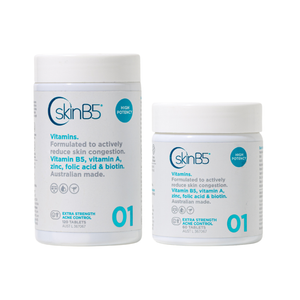
Extra Strength Acne Control Vitamins - choose from 2 pack sizes
Add To Cart -
SkinB5 Starter Kit (FREE Bonus Mask)
Add To Cart -FAQs
Is back acne different from face acne?
No. It's the same condition, driven by oil, dead skin cells, bacteria and hormones. The back gets it worse because sweat is trapped under clothing, friction irritates follicles, and it's hard to cleanse properly.
How do I get rid of back acne fast?
Shower immediately after sweating, use a benzoyl peroxide or salicylic acid wash and leave it on for a minute before rinsing, wear breathable fabric, and don't pick. Most mild bacne improves within four to six weeks.
What causes back acne in adults?
Hormones, genetics, sweat trapped under clothing, friction from straps and seats, product run-off from hair care, and oil production that doesn't stop after adolescence. Adult bacne is common and treatable.
Why is my back acne itchy?
Itchy, uniform small bumps across the upper back are often fungal (Malassezia) folliculitis, not acne. It needs an antifungal wash. Acne products and antibiotics don't help and can make it worse.
Can back acne scars go away?
Flat red or dark marks fade over months, faster with sunscreen and retinoids. Depressed scars need professional treatment (microneedling, laser, peels). Raised scars and keloids need a dermatologist. Preventing scars by treating bacne early and never picking is far easier than removing them.
Does sun help back acne?
No. Sun temporarily dries lesions and darkens skin so spots look less obvious, then it thickens skin, worsens clogging and darkens post-acne marks. Use a non-comedogenic sunscreen on exposed skin.
Treat the back you can't reach from the inside. The SkinB5 Starter Kit pairs Vitamin B5 supplements that support oil balance everywhere with the Cleansing Mousse and Moisturiser for the skin you can reach.
Related reading: Tips on How to Prevent Acne Scarring · Top 5 Skincare Tips for Summer · How to Treat Clogged Pores
Skin Health & Wellness Articles
RSS
Does Drinking Water Help Acne?
Does Drinking Water Help Acne? Not the Way You've Been Told. Short answer: No, drinking water doesn't clear acne. There's no good evidence that water...

Are Pimple Patches Actually Effective?
Pimple patches have quickly become a staple in modern skincare routines, earning widespread attention for their ability to target blemishes with precision. These tiny, sticker-like...


