


Cold Showers are good for your skin?
Posted by Farah Afridi on
Are Cold Showers Good for Your Skin? Yes, But Not for the Reasons You've Heard
Short answer: Cold showers won't close your pores (pores can't close), won't cure acne, and won't make you immune to colds. What they do: temporarily reduce redness and puffiness by constricting blood vessels, and, more importantly, they aren't hot showers, which strip the oils your skin barrier needs. The evidence-based version for acne-prone skin is lukewarm water to cleanse, cold to finish. Ten to thirty seconds is plenty.
Cold showers are having their moment. Wim Hof, ice baths in the backyard, that one friend who won't stop talking about it. And somewhere in the enthusiasm the claims have drifted from "invigorating" to "closes your pores, clears your acne and makes you immune to everything."
Let's sort what's real from what's a cold-induced high. There's a genuine skin benefit in here. It's just smaller and simpler than the internet says.
What cold water actually does to your skin
Cold water constricts the small blood vessels near the surface (vasoconstriction). For a few minutes, that means:
- Less redness. Flushed, blotchy or irritated skin looks calmer. Rosacea-prone and post-workout faces notice this most.
- Less puffiness. Under-eye bags and morning face swelling reduce temporarily.
- A tighter feel. Skin feels firmer as vessels narrow. This is what people mistake for "pores closing." Pores have no muscle; they can't close. The skin around them tightens briefly, and that's it.
- The glow. When you step out, vessels re-open and blood rushes back. That flush is the "cold shower glow." It's real, and it lasts about as long as a blush.
None of this treats acne. Acne is a clogged pore inflamed from within; cold water on the surface doesn't reach it.
The real skin benefit: what cold showers aren't
Here's the part that matters. Hot water is genuinely bad for skin, and especially for acne-prone skin.
Hot showers dissolve and rinse away sebum and the lipids that hold your skin barrier together. A stripped barrier is dehydrated, reactive and, in oily skin, prone to rebound oil production. Long hot showers are one of the most common reasons acne-prone skin ends up both tight and greasy.
Cold water doesn't strip those lipids. So the benefit of a cold shower for skin is less about what cold does and more about what hot was doing that you've stopped.
| Hot shower | Cold shower | Lukewarm + cold finish | |
|---|---|---|---|
| Strips barrier lipids | Yes | No | Minimal |
| Cleanses oil effectively | Yes (too well) | Poorly (sebum stays solid) | Yes |
| Reduces redness | No, increases it | Yes, briefly | Yes, briefly |
| Opens or closes pores | Neither | Neither | Neither |
| Treats acne | No | No | No, but supports barrier |
| Comfortable | Very | Not initially | Yes |
Cold showers and acne: the honest verdict
No study shows cold showers reduce acne. Cold water also cleanses worse than warm, because sebum is a waxy oil that softens with warmth; a fully cold wash can leave more oil on the skin, not less.
The approach that lines up with the evidence:
- Cleanse with lukewarm water, warm enough to soften oil, not hot enough to strip. Use a gentle, non-stripping cleanser; our Acne Control Cleansing Mousse is built to lift oil without taking the barrier with it.
- Finish with 10–30 seconds of cold on the face and body. Calms redness, feels good, costs nothing.
- Moisturise while skin is damp, with something light and non-comedogenic like our Acne Control Moisturiser. Cold water doesn't hydrate skin; it just doesn't dehydrate it.
- Work on the oil from within. Water temperature is a surface variable. Oil production is set inside. Our Extra Strength Acne Control Vitamins use high-dose Vitamin B5 to support healthy oil balance from the inside, which is where the acne conversation actually lives.
You don't need a full cold shower for the skin benefit. A cold splash at the end, or 30 seconds of cold water on your face over the sink, gets you there.
The other benefits people talk about
Immunity. One well-designed Dutch trial found people who ended their showers cold took about 29% fewer sick days from work. They didn't get sick less often; they felt well enough to go in. So: not immunity, but something. "I never get sick" is not what the data says.
Mood and alertness. This one holds up. Cold exposure triggers a spike in noradrenaline and endorphins, which is why a cold shower feels like a strong coffee and a good mood rolled together. Small studies suggest a mood benefit. Enjoy it.
Circulation. Vessels constrict, then dilate when you warm up. Whether repeated cycles improve circulation long-term is not well established. It's plausible and unproven.
Hair. A cold rinse can flatten the hair cuticle so hair looks shinier. Minor, but real enough.
Oil production. The original version of this article worried that the adrenaline rush would raise cortisol and therefore oil. There's no evidence cold showers change sebum production in either direction. Cross it off both lists.
What a cold shower feels like (for the uninitiated)
The first one is a genuine shock. Your breath catches, your shoulders come up, every muscle tightens, and for about ten seconds your body is convinced this is an emergency. Then it settles. Warmth spreads out from your core, the water stops feeling hostile, and by the time you step into a towel you feel like you've finished a run: alert, loose, quietly pleased with yourself.
Two tips. Don't test the water with your hand first; it makes the plunge worse. And start with a cold finish rather than a cold shower: last 15 seconds, then work up.
Who should be careful
Cold water triggers a "cold shock" response: gasping, a fast heart rate, and a jump in blood pressure. For most healthy people that's the point. Talk to your GP first if you have high blood pressure, a heart condition, Raynaud's, are pregnant, or have any condition affected by sudden temperature change. Never do cold immersion (baths, ocean, rivers) alone.

SkinB5 Starter Kit (FREE Bonus Mask)
Add To Cart -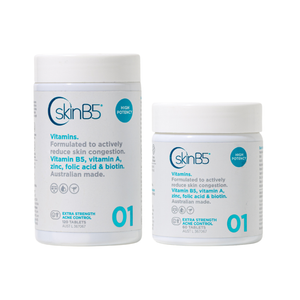
Extra Strength Acne Control Vitamins - choose from 2 pack sizes
Add To Cart -FAQs
Are cold showers good for your skin?
Modestly, yes. They temporarily reduce redness and puffiness and, unlike hot showers, don't strip the skin barrier's protective oils. They don't close pores or treat acne.
Do cold showers help acne?
No evidence shows they do. Cold water also cleanses oil less effectively than lukewarm. Wash with lukewarm water and finish cold for the barrier benefit without the trade-off.
Do cold showers close your pores?
No. Pores have no muscle and can't open or close. Cold water tightens the surrounding skin briefly, which creates the impression of smaller pores.
Is hot water bad for acne?
Yes. Hot water strips barrier lipids, leaving skin dehydrated and prone to rebound oil production. Lukewarm is the right temperature for washing acne-prone skin.
How long should a cold shower be for skin benefits?
Ten to thirty seconds of cold at the end of a lukewarm shower is enough. Longer cold exposure has mood and alertness benefits but no additional skin benefit.
Do cold showers give you a glow?
Briefly. Blood vessels constrict in the cold and re-open as you warm up, flushing the skin. The effect lasts minutes, like a blush.
Turn down the water. Turn up the B5. The SkinB5 Starter Kit pairs a gentle cleanse and moisturise with Vitamin B5 supplements that support oil balance from within, whatever temperature you shower at.
Related reading: How to Treat Clogged Pores · Does Drinking Water Help Acne? · Natural Remedies to Relieve Inflammation in Acne-Prone Skin
Skin Health & Wellness Articles
RSS
Does Drinking Water Help Acne?
Does Drinking Water Help Acne? Not the Way You've Been Told. Short answer: No, drinking water doesn't clear acne. There's no good evidence that water...

Are Pimple Patches Actually Effective?
Pimple patches have quickly become a staple in modern skincare routines, earning widespread attention for their ability to target blemishes with precision. These tiny, sticker-like...


