


The Best 5 Teas for Acne, Ranked by Evidence (Not by Vibes)
Posted by Farah Afridi on
The Best Tea for Acne, Ranked by Evidence (Not by Vibes)
Short answer: Green tea has the strongest evidence for skin, mostly when applied topically and modestly when drunk. Spearmint has real (small) evidence for lowering androgens in women, which is why it gets talked about for hormonal acne. Chamomile is a good anti-inflammatory and a better sleep aid. Rooibos is a pleasant, caffeine-free antioxidant source with little acne-specific data. Dandelion's "detox" reputation is not supported. No tea replaces treatment, but green tea and spearmint are worth the kettle.
Your cupboard is not a pharmacy. Every wellness account on the internet will tell you the right tea will "purify your blood," "detox your skin" and "balance your hormones," and most of that is folklore with a nice font.
But two of these teas have actual studies behind them, and the other three are at least harmless and pleasant. Here they are, in order of how much the evidence backs them, so you know which one to actually bother with.
What the evidence says, at a glance
| Tea | Best for | Evidence strength | How to use |
|---|---|---|---|
| Green tea | Oil control, inflammation | Moderate (topical), modest (drinking) | 2–3 cups a day; green tea in skincare |
| Spearmint | Hormonal / jawline acne in women | Small trials on androgens, not acne directly | 1–2 cups a day, consistently |
| Chamomile | Irritated, sensitive skin; sleep | Modest (topical anti-inflammatory) | Evening cup; cooled tea as compress |
| Rooibos | Antioxidant top-up, caffeine-free | Weak / indirect | Swap for coffee or black tea |
| Dandelion | Mild diuretic | Very weak for skin; "detox" claim unsupported | Optional; skip if on diuretics or allergic to daisies |
1. Green tea: the one with actual data
Does green tea help acne? Yes, with caveats. Green tea's main active compound, EGCG (epigallocatechin gallate), has anti-inflammatory and antioxidant activity, and in lab and small clinical studies it's been shown to reduce sebum production and have some activity against acne-related bacteria. Most of the best evidence is for green tea applied to the skin: small trials of green tea lotions and extracts have reported fewer lesions and less oiliness after several weeks.
Drinking it is a weaker but reasonable bet. One small trial of decaffeinated green tea extract in adult women found fewer inflammatory lesions around the nose, mouth and chin, though not across the whole face. I'd call that promising rather than proven, and it's worth verifying the details before quoting it.
How to use it: two to three cups a day, brewed properly (80°C water, 2–3 minutes; boiling water makes it bitter and degrades some of the good stuff). And use it on your skin: it's in our Acne Control Cleansing Mousse alongside Vitamin B5 and aloe, which is the delivery method with the better evidence.
2. Spearmint: the hormonal acne one
Does spearmint tea help hormonal acne? Indirectly, maybe. Two small trials in women with polycystic ovary syndrome found that drinking spearmint tea twice a day lowered free testosterone over a few weeks. Since androgens drive oil production, that's the mechanism people extrapolate to acne. To be clear: those studies measured hormones and excess hair growth, not pimples. Nobody has run a proper acne trial. But the mechanism is plausible and the anecdotal reports are consistent enough that it's a sensible experiment if your breakouts cluster on the jaw and chin and track your cycle.
How to use it: one to two cups a day (spearmint, Mentha spicata, not peppermint) for at least eight weeks before you judge it. Because it may affect hormones, check with your GP first if you're pregnant, trying to conceive, or on hormonal treatment.
And if hormonal acne is your pattern, tea is a supporting act. The main lever is oil, and that's what our Extra Strength Acne Control Vitamins are built for: high-dose Vitamin B5 to support healthy oil balance from within. We've written more on hormonal acne and how to approach it.
3. Chamomile: calm skin, better sleep
Is chamomile tea good for skin? It's a good anti-inflammatory, and the evidence is stronger for putting it on skin than drinking it. Chamomile compounds (apigenin, bisabolol) show soothing effects in studies on irritated skin, which is why it turns up in products for sensitive and eczema-prone skin.
Its real skin value may be the sleep. Poor sleep raises cortisol, cortisol nudges oil production and inflammation up, and chamomile has modest evidence as a sleep aid. That chain is sensible; "chamomile balances your hormones" is not a claim the evidence supports.
How to use it: a cup in the evening. For an angry spot, a cooled, strong chamomile tea bag pressed on for a few minutes is a gentle compress. Skip it if you're allergic to daisies, ragweed or chrysanthemums (same plant family).
4. Rooibos: nice, caffeine-free, not a treatment
Does rooibos help acne? There's no acne-specific evidence I'm aware of. Rooibos does contain antioxidants (aspalathin and others), and it's naturally caffeine-free, so it's a decent swap for a fourth coffee if caffeine winds you up. The claim that it's rich in zinc and vitamin D, which the older version of this article made, is wrong: plants don't provide meaningful vitamin D, and the mineral content of a brewed cup is trivial.
How to use it: drink it because you like it. Some people use cooled rooibos as a toner; it's harmless, and if it feels soothing, fine, but don't expect it to clear anything.
5. Dandelion: the "detox" myth
Does dandelion tea purify your skin? No. There's no such thing as "purifying the blood," and your liver and kidneys handle toxin removal without help from a herb. Dandelion is a mild diuretic and contains antioxidants, and that's about the extent of it. It can also interact with prescription diuretics and lithium, and triggers reactions in people allergic to the daisy family.
It's on this list because people search for it, and because we'd rather tell you plainly than let the old version of this article keep implying it works wonders.
What tea can and can't do for your skin
Tea can lower inflammation a little, provide antioxidants, replace sugary drinks, and, in the case of spearmint, possibly nudge hormones in a helpful direction. What tea can't do is unclog a pore, change your genetics, or regulate oil production on its own.
If your acne is persistent, the tea goes on top of a proper routine, not instead of one. Green tea on the skin, Vitamin B5 from within, and a gentle cleanse and moisturise is a routine. A cup of chamomile is a nice thing to do while you're at it.

Clear Skin Superfood Booster Sachets
Add To Cart -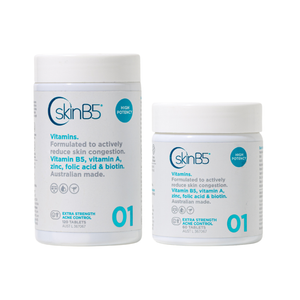
Extra Strength Acne Control Vitamins - choose from 2 pack sizes
Add To Cart -FAQs
What is the best tea for acne? Green tea, based on the evidence. It has anti-inflammatory and oil-reducing activity, strongest when applied topically and modest when drunk. Spearmint is the runner-up for hormonal acne in women.
How much green tea should I drink for acne? Two to three cups a day is a reasonable amount. Evidence for drinking green tea is modest; using green tea in skincare has better support.
Does spearmint tea really help hormonal acne? Small studies show spearmint tea can lower androgens in women with PCOS. No study has tested it on acne directly, so the benefit is plausible but unproven. Give it eight weeks and check with your GP if you're pregnant or on hormonal treatment.
Can I put tea directly on my skin? Yes. Cooled green or chamomile tea on a cotton pad is a gentle, low-risk compress or toner. Patch test first, and don't expect it to replace an actual acne treatment.
Does dandelion tea detox your skin? No. "Detox" is not a function tea performs; your liver and kidneys do that. Dandelion is a mild diuretic with no meaningful acne evidence.
Tea is a good habit. It isn't a plan. The SkinB5 Starter Kit is: Vitamin B5 supplements to support oil balance from within, and green tea in the cleanser on the surface.
Related reading: How to Treat Hormonal Acne Without the Nasties · Prebiotics, Probiotics and Skin Health · Masala Chai Time
Skin Health & Wellness Articles
RSS
Does Drinking Water Help Acne?
Does Drinking Water Help Acne? Not the Way You've Been Told. Short answer: No, drinking water doesn't clear acne. There's no good evidence that water...

Are Pimple Patches Actually Effective?
Pimple patches have quickly become a staple in modern skincare routines, earning widespread attention for their ability to target blemishes with precision. These tiny, sticker-like...


