


How to treat acne scars
Posted by Farah Afridi on
How to Treat Acne Scars: First Work Out Which Kind You've Got
Short answer: Most of what people call acne scars are flat red or brown marks that fade on their own in 3–12 months, faster with sunscreen, retinoids and vitamin C. True scars are changes in skin texture: pitted (atrophic) scars from collagen loss, or raised (hypertrophic and keloid) scars from too much collagen. Pitted scars need professional treatment (microneedling, laser, TCA, subcision); raised scars need a dermatologist (silicone, steroid injections). No cream or supplement removes a true scar. The best scar treatment is preventing the next one: treat acne early and never pick.
Scarring is the part of acne that outlasts acne. And the reason so many people spend years and hundreds of dollars on it without result is that "acne scars" is three different problems wearing one name, and the treatments for one do nothing for the others.
So before anything else: which kind do you have?
What kind of acne scar is it?
| Type | Looks like | What it is | Does it fade? | Treatment tier |
|---|---|---|---|---|
| Red marks (post-inflammatory erythema) | Flat pink/red spots where a pimple was | Dilated blood vessels, not a scar | Yes, 3–6 months | Home + time |
| Dark marks (post-inflammatory hyperpigmentation) | Flat brown/black spots; more common in medium to deep skin tones | Excess melanin, not a scar | Yes, 3–12 months, longer without sunscreen | Home + time |
| Ice pick scars | Narrow, deep pits, like a pin hole | Collagen loss deep in the dermis | No | Professional (TCA CROSS, punch excision) |
| Boxcar scars | Wider, shallow depressions with sharp edges | Collagen loss, broader | No | Professional (laser, microneedling, fillers) |
| Rolling scars | Wavy, uneven texture, no sharp edges | Fibrous bands tethering skin down | No | Professional (subcision, microneedling) |
| Hypertrophic scars | Raised, firm, within the original spot | Excess collagen | Partly, slowly | Dermatologist (silicone, steroid injection) |
| Keloids | Raised, grow beyond the original spot; often chest, shoulders, jaw | Runaway collagen; genetic tendency | No, can grow | Dermatologist only |
The first two rows are marks, not scars, and they're what most people are dealing with. Good news: they go. The rest are texture changes, and no product on a shelf will fix them.
How acne scars form
A pimple is an inflamed follicle. The immune system sends white blood cells, mostly neutrophils, which release enzymes to break down bacteria and debris. Those enzymes aren't precise: they also break down the surrounding collagen and elastin. The deeper and longer the inflammation, the more collagen is destroyed.
Skin then repairs the damage, and repair is imprecise too. Not enough new collagen and you get a pit. Too much and you get a raised scar. Roughly the right amount and you get a flat mark that fades as the blood vessels and pigment settle.
Three things decide which way it goes: depth (nodules and cysts scar far more than surface pimples), duration (a spot inflamed for weeks does more damage than one settled in days), and trauma (squeezing pushes inflammation deeper and tears tissue). Genetics and skin tone set the baseline; darker skin tones are more prone to dark marks and keloids.
Treating marks (red and brown)
These respond well to home care, and the single most important item is sunscreen.
- Sunscreen daily, SPF 30+. UV darkens pigment and slows fading. A mark that would clear in three months can last a year on unprotected skin. Non-negotiable, and the reason "sun helps scars" is backwards.
- Retinoid at night. Speeds cell turnover so pigmented cells shed faster. Adapalene or retinol over the counter, tretinoin by prescription. Start slow.
- Vitamin C serum in the morning. Inhibits melanin production and supports collagen. 10–20% L-ascorbic acid or a stable derivative.
- Azelaic acid or niacinamide. Both reduce pigment transfer and calm redness; both are gentle enough for sensitive or acne-prone skin.
- Don't pick, scratch or over-exfoliate. Every bit of new inflammation resets the clock.
- Keep the barrier hydrated. Healing skin needs moisture; a light non-comedogenic moisturiser like our Acne Control Moisturiser, with aloe, green tea and Vitamin B5, keeps skin calm while marks fade.
Give it three months of consistency before judging. Red marks usually go first; brown marks on deeper skin tones take longest and need the sunscreen most.
Treating pitted (atrophic) scars
These need collagen rebuilt or the scar physically released, and that means a clinic. What works, matched to type:
- Microneedling (collagen induction). Fine needles create controlled micro-injuries that trigger new collagen. Good for rolling and boxcar scars; several sessions. Radiofrequency microneedling goes deeper.
- Fractional laser (ablative or non-ablative). Resurfaces and stimulates collagen. Boxcar and rolling; the strongest option, with real downtime for ablative versions.
- Chemical peels. Medium-depth TCA peels help shallow boxcar scars. TCA CROSS (high-strength acid applied into individual ice-pick scars) is the best option for ice picks.
- Subcision. A needle releases the fibrous bands under rolling scars so the skin lifts. Often combined with microneedling or filler.
- Dermal fillers. Lift boxcar and rolling scars temporarily; some newer fillers stimulate collagen for longer results.
- Punch excision. Cutting out a deep ice-pick scar and closing it, swapping a pit for a fine line.
Realistic expectations: professional treatment typically improves texture by a noticeable but partial amount over a course of sessions. "Complete removal" is not a phrase a reputable clinic uses. Choose a dermatologist or an experienced dermal clinician; the wrong laser setting on the wrong skin tone can create new pigmentation.
Treating raised scars and keloids
Home care won't shift these and aggressive home treatments can make keloids grow. See a dermatologist. Standard options: silicone gel sheets or gel (months of daily use), corticosteroid injections into the scar, pulsed-dye laser for redness, and, for keloids, combinations of the above; surgery alone often makes keloids return larger. If you form keloids, tell any clinician before any procedure, including piercings.
Home remedies for acne scars: what actually does something
| Remedy | Verdict |
|---|---|
| Sunscreen | The most effective "home remedy" there is for marks |
| Retinoids, vitamin C, azelaic acid, niacinamide | Evidence-backed for marks |
| Silicone gel | Evidence-backed for raised scars |
| Aloe vera | Soothes, hydrates; may help marks settle; no effect on texture |
| Green tea (topical) | Anti-inflammatory; supports calmer healing; not a scar treatment |
| Vitamin E oil | No; the best-known controlled trial found no benefit and frequent skin reactions |
| Lemon juice, baking soda, apple cider vinegar | No; irritants that worsen pigmentation (why) |
| Coconut oil | No; clogs pores on acne-prone skin |
| Dermarollers at home | Risky; infection and scarring if done wrong; leave needling to clinics |
Nutrition and scar healing
Healing skin does need raw materials: protein, vitamin C (collagen synthesis), zinc (wound healing and inflammation), vitamin A (cell turnover), and adequate calories. Deficiencies slow healing and worsen outcomes; correcting them helps healing proceed normally. That's the honest scope of nutrition here. No supplement removes a scar that's already formed.
Where supplements do matter for scarring is upstream: less acne, fewer deep lesions, fewer scars. That's the SkinB5 case. Our Extra Strength Acne Control Vitamins are formulated with high-dose Vitamin B5 to support healthy oil balance from within, with Vitamin B3 and supporting nutrients including zinc for skin repair and inflammation. [Confirm full nutrient list against the label before publishing.] Fewer inflamed breakouts is the most effective scar treatment you'll ever use, because it happens before the scar does.
How to prevent acne scars
- Treat acne early and adequately. Nodules and cysts scar; the longer they're active, the worse it gets. If you get them, see a GP now, not after the scars.
- Never pick or squeeze. Especially not deep spots. Hydrocolloid patches exist to stop you.
- Sunscreen every day, marks or not.
- Don't over-treat. Harsh scrubs and stacked acids inflame skin and slow healing.
- Keep the barrier calm with a gentle cleanser and light moisturiser.
Full guide: Tips on How to Prevent Acne Scarring.
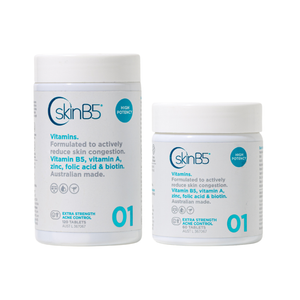
Extra Strength Acne Control Vitamins - choose from 2 pack sizes
Add To Cart -
Skin Rescue Vitamins - One a Day
Add To Cart -FAQs
Do acne scars go away on their own?
Red and brown marks do, in 3–12 months, faster with sunscreen and retinoids. Pitted and raised scars are permanent changes in skin structure and need professional treatment to improve.
What's the best treatment for acne scars?
Depends on type. Marks: sunscreen, retinoids, vitamin C. Ice-pick scars: TCA CROSS. Boxcar and rolling: microneedling, laser, subcision. Raised scars and keloids: silicone and steroid injections from a dermatologist.
Can you get rid of acne scars at home?
Marks, yes, with consistent sunscreen and actives over a few months. True scars, no; home dermarolling and DIY acids are more likely to cause damage than fix it.
Does vitamin E help acne scars?
No. Controlled research found topical vitamin E didn't improve scars and caused skin reactions in many users. It's fine as an antioxidant in a moisturiser, not as a scar treatment.
How long do acne scars take to heal?
Red marks 3–6 months, brown marks 3–12 months with sun protection. Pitted scars don't heal on their own; professional treatment usually takes several sessions over months.
Can supplements help acne scars?
They help healing proceed normally if you're deficient in nutrients like zinc, vitamin C or protein, and they help most by reducing the acne that causes scars. No supplement removes an existing scar.
The best scar treatment happens before the scar. The SkinB5 Starter Kit pairs Vitamin B5 supplements for oil balance from within with a gentle cleanse and moisturise, so fewer breakouts turn into marks.
Related reading: Tips on How to Prevent Acne Scarring · Back Acne: Causes, Treatment and Scar Prevention · Types of Acne: The 6 Kinds and Their Causes · Applying Vitamin C Serum for Acne-Prone Skin
References:
- Neutrophil granulocyte. Wikipedia; 2015; Available from: https://en.wikipedia.org/wiki/Neutrophil_granulocyte.
- Niren NM, Torok HM. The Nicomide Improvement in Clinical Outcomes Study (NICOS): results of an 8-week trial. Cutis 2006;77(1 Suppl):17-28.
- Eshghi F, Hosseinimehr SJ, Rahmani N, Khademloo M, Norozi MS, Hojati O. Effects of Aloe vera cream on posthemorrhoidectomy pain and wound healing: results of a randomized, blind, placebo-control study. J Altern Complement Med 2010;16(6):647-50.
- Park G, Yoon BS, Moon JH, Kim B, Jun EK, Oh S, et al. Green tea polyphenol epigallocatechin-3-gallate suppresses collagen production and proliferation in keloid fibroblasts via inhibition of the STAT3-signaling pathway. J Invest Dermatol 2008;128(10):2429-41.
- Lin TS, Abd Latiff A, Abd Hamid NA, Wan Ngah WZ, Mazlan M. Evaluation of topical tocopherol cream on cutaneous wound healing in streptozotocin-induced diabetic rats. Evid Based Complement Alternat Med 2012;2012:491027.
 Haley is a passionate Naturopath & nutrition expert, writer, and mum of 2 young children, with years of experience in the industry. She is a known as a real 'nutrition nerd' and follows the latest natural health research. As a Paleo and raw food enthusiast, she coaches people in healthy living, beauty and positive mindset. Haley has personally experienced the benefits of the SkinB5 natural acne treatment system and is happy to offer her guidance to help others regain clear skin. Follow her blog at www.aliveinwonderland.com & link with her on facebook at www.facebook.com/aliveinwonderlandhealth
Skin Health & Wellness Articles
RSS
Does Drinking Water Help Acne?
Does Drinking Water Help Acne? Not the Way You've Been Told. Short answer: No, drinking water doesn't clear acne. There's no good evidence that water...

Are Pimple Patches Actually Effective?
Pimple patches have quickly become a staple in modern skincare routines, earning widespread attention for their ability to target blemishes with precision. These tiny, sticker-like...


