

Adrenal Fatigue and Acne
Posted by Farah Afridi on
Adrenal Fatigue and Acne: The Diagnosis Isn't Real. The Stress Acne Is.
Short answer: "Adrenal fatigue" isn't a recognised medical condition; your adrenal glands don't wear out from stress, and tests don't show it. But chronic stress does dysregulate the system that controls cortisol (the HPA axis), and cortisol acts directly on your oil glands, which have receptors for stress hormones. Long-term stress means more oil, more inflammation, worse sleep and worse skin, and acne itself feeds the stress. If you have the fatigue-insomnia-breakouts cluster, get a GP to rule out thyroid, iron, sleep and mood conditions, then treat the stress and the oil together.
Tired, wired, breaking out, not sleeping, and the internet has a name for it: adrenal fatigue. It's a satisfying explanation. It's also not one endocrinologists accept, and it's worth understanding why, because the real explanation is more useful and points to better fixes.
What "adrenal fatigue" gets right
Your adrenal glands sit above your kidneys and release cortisol and adrenaline when your brain signals stress. That's the fight-or-flight system, built for short emergencies. Modern stress isn't short: it's work, money, relationships and a phone that never stops, so the system runs for months.
Chronic cortisol exposure does real things: it raises blood sugar, suppresses digestion and reproductive hormones, disrupts sleep, dampens some immune responses, and drives inflammation. The naturopathic idea of "adrenal fatigue" is trying to describe the lived experience of that: exhausted, foggy, craving sugar, wired at night, skin misbehaving. The experience is real.
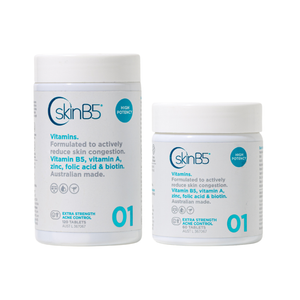
Extra Strength Acne Control Vitamins - choose from 2 pack sizes
Add To Cart -
Professional Strength Acne Control Vitamins - 180 Tablets
Add To Cart -What it gets wrong
The theory says the adrenals get "worn out" and stop producing enough cortisol. That's the part that doesn't hold up. Adrenal insufficiency is a real, serious, testable condition (Addison's disease), and people with the "adrenal fatigue" symptom cluster don't test as having it. A 2016 systematic review of 58 studies found no evidence that adrenal fatigue exists as a condition, and endocrinology societies don't recognise it.
What the research does support is HPA-axis dysregulation: under chronic stress, the brain-pituitary-adrenal feedback loop that controls cortisol gets miscalibrated. Cortisol rhythm flattens (too high at night, sluggish in the morning), and the body's response to stress becomes disordered. Not tired glands, a mistuned thermostat. The distinction matters because the fixes are different: you don't "rest the adrenals," you retrain the rhythm.
How chronic stress causes acne
This part is solid.
- Sebaceous glands have receptors for stress hormones. Corticotropin-releasing hormone (CRH), the first signal in the stress cascade, acts directly on oil glands and increases sebum production. Cortisol and androgens follow.
- Inflammation rises. Chronic cortisol dysregulation drives systemic inflammation. Acne is an inflammatory condition.
- Sleep collapses. A flattened cortisol rhythm keeps you wired at night. Poor sleep cuts skin repair and raises cortisol further.
- Blood sugar swings. Cortisol raises glucose; stress raises sugar cravings. Both push insulin and IGF-1, the oil-production pathway.
- The loop. Breakouts are stressful. Stress causes breakouts.
Where it shows up: the jawline and chin (most androgen-sensitive), and often the back and chest. Alongside it, the same dysregulation can surface as worse PMS, weight gain around the middle, anxiety or low mood, and, in some women, PCOS features.
What to rule out first
The "adrenal fatigue" symptom cluster overlaps with real, treatable conditions. Before you buy an adaptogen, a GP can check:
- Thyroid function (underactive thyroid causes fatigue, weight gain, dry skin, hair loss)
- Iron and B12 (fatigue, poor skin healing, especially in women and vegans)
- Depression and anxiety (fatigue, sleep disruption, appetite change)
- Sleep apnoea (unrefreshing sleep, daytime exhaustion)
- Blood sugar (insulin resistance, prediabetes)
- Actual adrenal insufficiency, rarely, if there's unexplained weight loss, low blood pressure or skin darkening
Finding one of these is far better news than "adrenal fatigue," because each has a treatment.
What actually helps: retraining the stress response
Rhythm first. Same wake time daily, morning daylight within an hour of waking, screens off an hour before bed, caffeine before noon only. This is the most evidence-backed way to reset cortisol timing, and it's free.
Ten minutes of slow breathing. Longer exhale than inhale. Reliably lowers heart rate and acute cortisol.
Blood sugar steadiness. Protein at every meal, no sugar on an empty stomach, no skipping meals. Cortisol and insulin are a tag team; calm one and you calm the other.
Gentle movement, not punishing training. Walking, yoga, swimming. Intense exercise on top of chronic stress adds cortisol.
Talk to someone. Counselling and psychology are treatment, not a last resort. If stress has been running for months, this is the intervention with the biggest effect.
Nutrition. Chronic stress uses up B vitamins, magnesium and vitamin C faster; a diet rich in vegetables, legumes, nuts, seeds, eggs and oily fish covers them. Our Clear Skin Superfood Booster is a daily backstop. [Verify B-vitamin, magnesium and vitamin C content on the label.]
Vitamin B5. Pantothenic acid is required to make coenzyme A, which your body uses both to synthesise steroid hormones (including cortisol) and to metabolise the fats that become sebum. That dual role is why it sits at the centre of the SkinB5 formula. Our Extra Strength Acne Control Vitamins use high-dose B5 to support healthy oil balance from within, which is the pathway chronic stress pushes hardest, and topical B5 in the Cleansing Mousse and Moisturiser supports the barrier that stressed skin runs down.
Adaptogens, with care. Ashwagandha has moderate evidence from controlled trials for lowering perceived stress and cortisol. It also carries a small but real risk of liver injury reported in recent years, so buy from a reputable brand, stick to studied doses, don't combine with other liver-active supplements, and stop if you feel unwell. Skip it in pregnancy and with thyroid conditions unless a practitioner advises. Siberian ginseng and rhodiola are traditional stress herbs with weaker evidence. A qualified naturopath or herbalist can guide; a random bottle can't.
FAQs
Is adrenal fatigue real?
Not as a medical diagnosis. There's no evidence adrenal glands "wear out" from stress, and endocrinology bodies don't recognise the condition. Chronic stress does dysregulate the HPA axis that controls cortisol, which produces many of the same symptoms.
Can stress hormones cause acne?
Yes. Oil glands have receptors for stress hormones like CRH and cortisol, and chronic stress increases sebum, inflammation and sleep disruption. Stress acne typically appears on the jaw, chin, chest and back.
How do I know if my acne is stress-related?
It flares with stressful periods and poor sleep, clusters on the lower face, and eases when life calms. Track it against your week for a month.
What should I test for if I think I have adrenal fatigue?
Ask a GP to check thyroid, iron, B12, blood sugar and mood, and screen for sleep apnoea. These explain the symptom cluster far more often than anything adrenal.
Do adaptogens help stress acne?
Ashwagandha has moderate evidence for lowering stress and cortisol, which may help indirectly. It carries a small liver-injury risk; use reputable products at studied doses and check with a practitioner.
Does vitamin B5 help with stress and acne?
B5 is needed to make coenzyme A, used in both stress-hormone synthesis and sebum metabolism. High-dose B5 has early evidence for acne; it's a support for the oil side, not a stress treatment.
Reset the rhythm. Balance the oil. SkinB5 Extra Strength Acne Control Vitamins for the sebum that chronic stress drives, alongside the sleep, breathing and support that retrain the rest.
Related reading: Does Lack of Sleep Cause Acne? · How Your Increased Stress Levels Are Affecting Your Skin · Change the Mindset to Win Over Stress · B Vitamins for Skin
References:
- Kono, M. et al. (2007). Corticotropin-releasing hormone skin signaling is receptor-mediated and is predominant in the sebaceous glands. PubMed
- Cadegiani, F. & Kater, C. (2016). Adrenal fatigue does not exist: a systematic review. BMC Endocrine Disorders, 16, 48. [verify citation before publishing]
- Mayo Clinic. Chronic stress puts your health at risk. [link retained from original]
- Porth, C. (2005). Pathophysiology: Concepts of Altered Health States, 7th ed. Lippincott Williams & Wilkins.
Skin Health & Wellness Articles
RSS
Does Drinking Water Help Acne?
Does Drinking Water Help Acne? Not the Way You've Been Told. Short answer: No, drinking water doesn't clear acne. There's no good evidence that water...

Are Pimple Patches Actually Effective?
Pimple patches have quickly become a staple in modern skincare routines, earning widespread attention for their ability to target blemishes with precision. These tiny, sticker-like...


